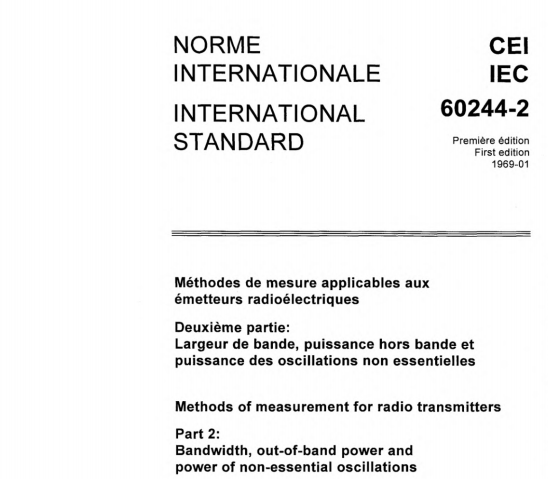
IEC 60244-2:1969 pdf download – Methods of measurement for radio transmitters. Part 2: Bandwidth, out-of-band power and power of non-essential oscillations.
IEC 60244-2:1969 is a technical standard that describes methods for measuring key performance characteristics of radio transmitters. Its main focus is on bandwidth, out-of-band power, and the power of non-essential oscillations. These measurements are important for evaluating how a transmitter operates within its assigned frequency range and how much unwanted energy it produces outside that range.
The standard provides common test methods so engineers and laboratories can measure transmitter performance in a consistent way. Bandwidth measurements show how wide the transmitted signal is, while out-of-band power indicates the amount of energy radiated beyond the intended channel. Measuring non-essential oscillations helps identify unwanted emissions that may interfere with other radio services or reduce transmission quality.
IEC 60244-2:1969 supports accurate testing, regulatory compliance, and product development. By using standardized procedures, manufacturers and technicians can compare results more reliably and improve the design of radio transmitters. The document is useful in broadcasting, telecommunications, and radio engineering, where controlling signal purity and spectral performance is essential.
For SEO purposes, useful keywords include IEC 60244-2:1969, radio transmitter measurement, bandwidth measurement, out-of-band power, non-essential oscillations, transmitter testing, and radio engineering standards. In summary, this standard defines methods for measuring bandwidth, out-of-band power, and unwanted oscillations in radio transmitters, helping ensure accurate evaluation, reduced interference, and better transmitter performance.