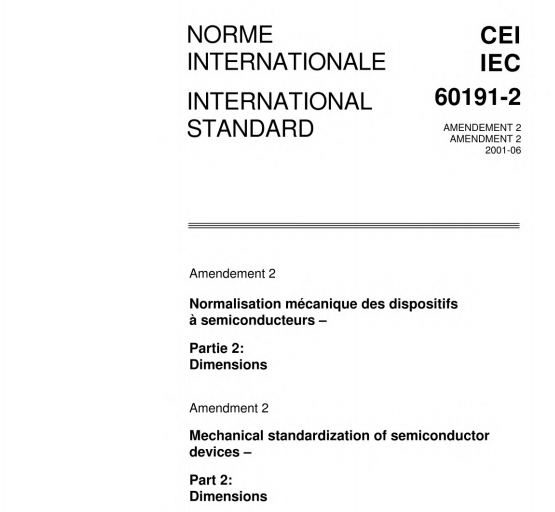
IEC 60191-2:1966/AMD2:2001 pdf download – Amendment 2 – Mechanical standardization of semiconductor devices – Part 2: Dimensions.
IEC 60191-2:1966/AMD2:2001 is an amendment to a semiconductor packaging standard that focuses on the mechanical standardization of semiconductor devices, specifically the standardized dimensions of their packages and related physical features. Its main purpose is to ensure that semiconductor components follow consistent size and shape requirements so they can be mounted, handled, assembled, and replaced more easily in electronic products.
The document supports interoperability by defining dimensional rules that help manufacturers design components compatible with standard circuit boards, sockets, and assembly processes. This is important because semiconductor devices must fit accurately into equipment, and even small differences in package dimensions can affect manufacturing quality, reliability, and production efficiency.
By standardizing dimensions, the document helps reduce design confusion, improve component interchangeability, and support global consistency in electronic hardware production. It is especially relevant to semiconductor manufacturers, PCB designers, electronic engineers, and quality-control teams who need clear mechanical specifications for device packaging.
For SEO purposes, the key topics in this document are IEC 60191-2, mechanical standardization, semiconductor devices, dimensions, package size, and electronic component compatibility. In simple terms, this standard amendment helps define the physical dimensions of semiconductor device packages so they can be used reliably and consistently in electronic assemblies. It contributes to better product design, easier manufacturing, and smoother integration across different device types and production systems.